This weekend marked the release of a new YOUSUNLONG Damascus Blade folding outdoor knife, and instead of presenting it in a studio or limiting my impressions to specs on paper, I approached it the way most people actually experience an EDC knife—by carrying it, using it, and paying attention to the small details that reveal whether a knife earns a place in daily rotation.
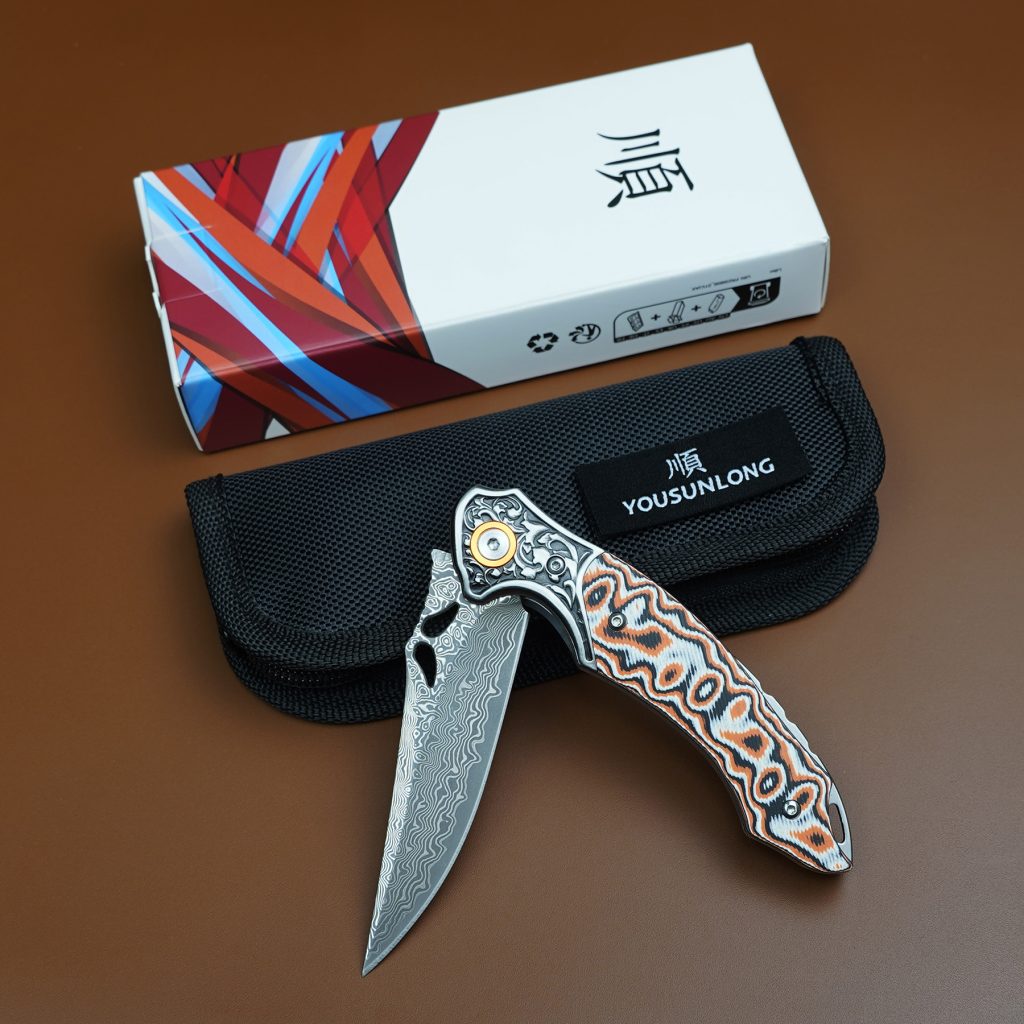
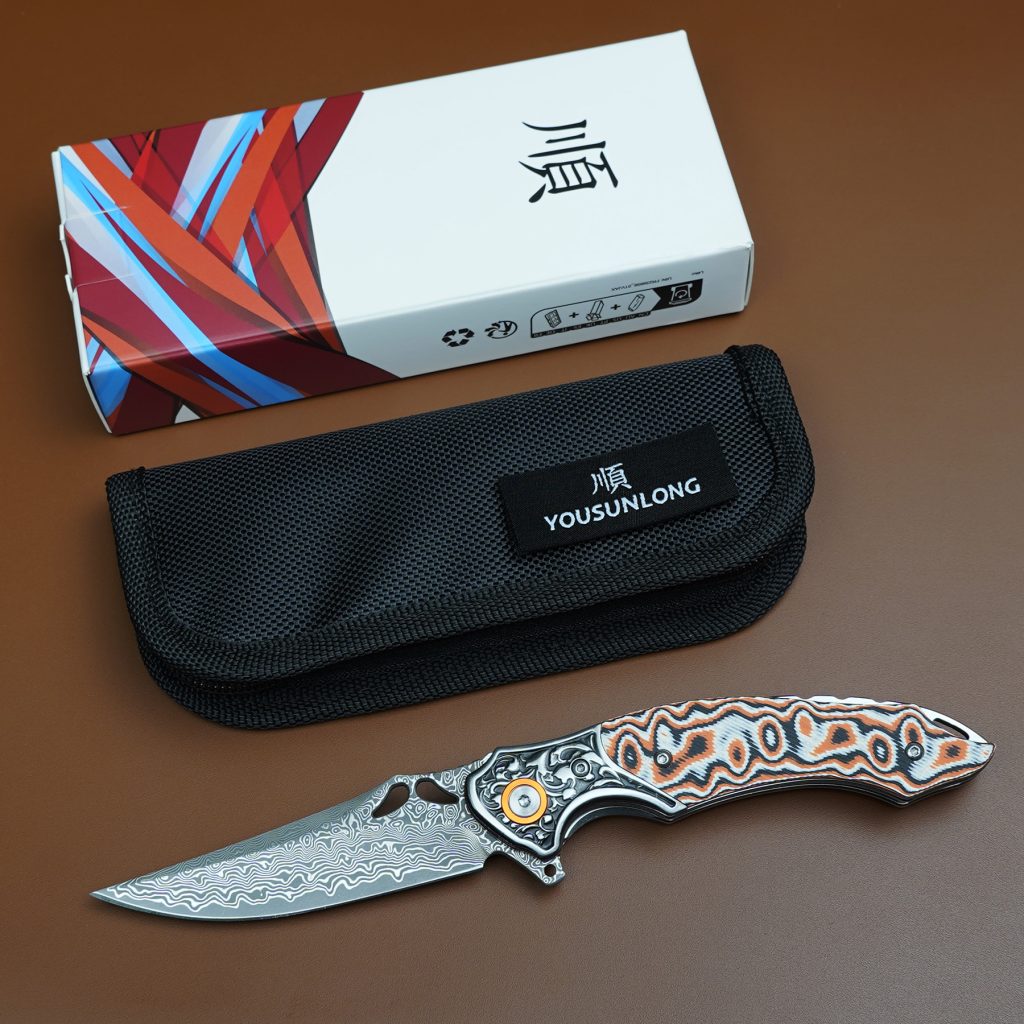
This is a Drop Point Damascus folding knife designed for everyday carry and light outdoor use. It features a Premium Damascus Blade, a flipper opening mechanism, a liner lock for blade security, and a colorful G10 handle. The numbers place it squarely in the mid-size EDC category:
Overall length: 197 mm
Blade length: 83 mm
Handle length: 114 mm
Weight: 132 g
Rather than testing extremes, I focused on how it fits into normal routines—pocket carry, food prep, trail-side tasks, and general daily use. This review reflects that experience.
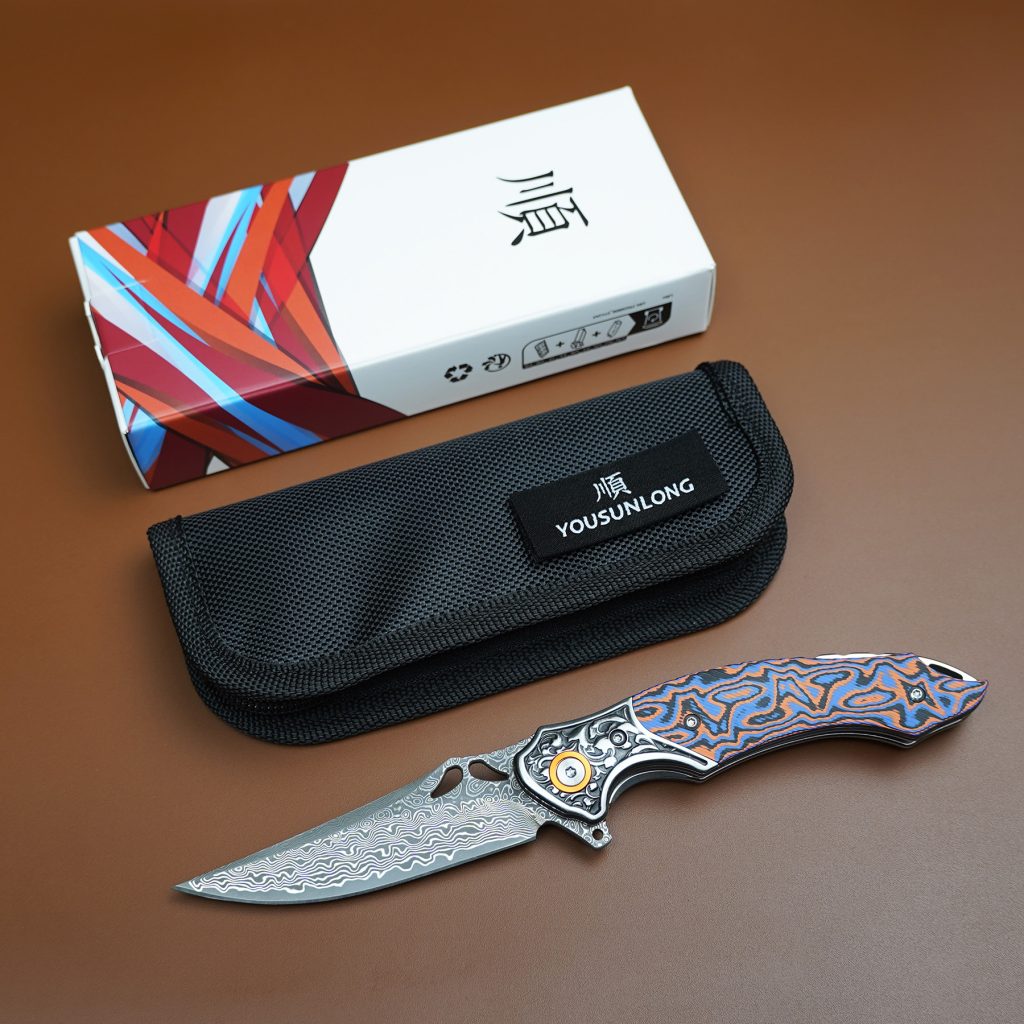
First Handling: Balanced, Modern, and Purposeful
The first thing I noticed when handling the knife was balance. At 132 grams, it doesn’t feel ultralight, but it also avoids the dense, overbuilt feel some outdoor knives have. The weight distribution favors control, with the balance point sitting close to the pivot.
The Drop Point blade shape immediately signals versatility. It’s a profile that works well across many tasks without drawing attention to itself. There’s no aggressive angle, no exaggerated tip, and no unnecessary styling. For a Damascus EDC knife, that restraint is welcome.
The Premium Damascus Blade pattern is visible but not overly polished. The texture looks natural, with layered steel patterns that catch light without feeling decorative for decoration’s sake. It looks like a blade meant to be used.
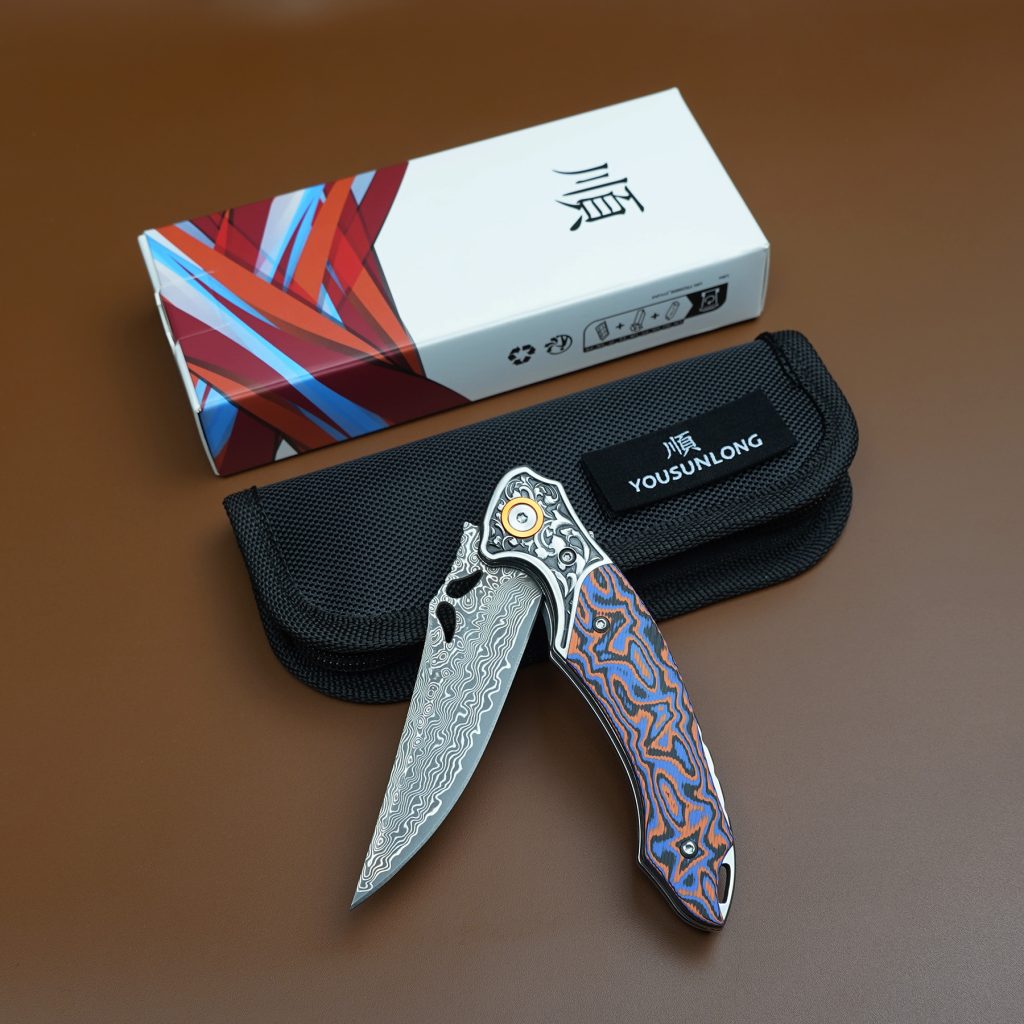
Pocket Carry: Everyday Comfort Matters
For any EDC folding knife, pocket comfort is non-negotiable. Over the course of the weekend, I carried this knife during walks, short hikes, driving, and general daily movement.
The 114 mm handle length provides a full grip without creating bulk in the pocket. The thickness feels moderate, and the edges are finished cleanly enough that they don’t rub against the leg or snag fabric.
During extended wear:
- The knife stayed stable in the pocket
- There was no noticeable pressure when sitting
- Movement felt natural while walking
- Drawing and re-pocketing were easy and consistent
This is the kind of knife that doesn’t demand attention while being carried, which is often a sign of thoughtful EDC design.
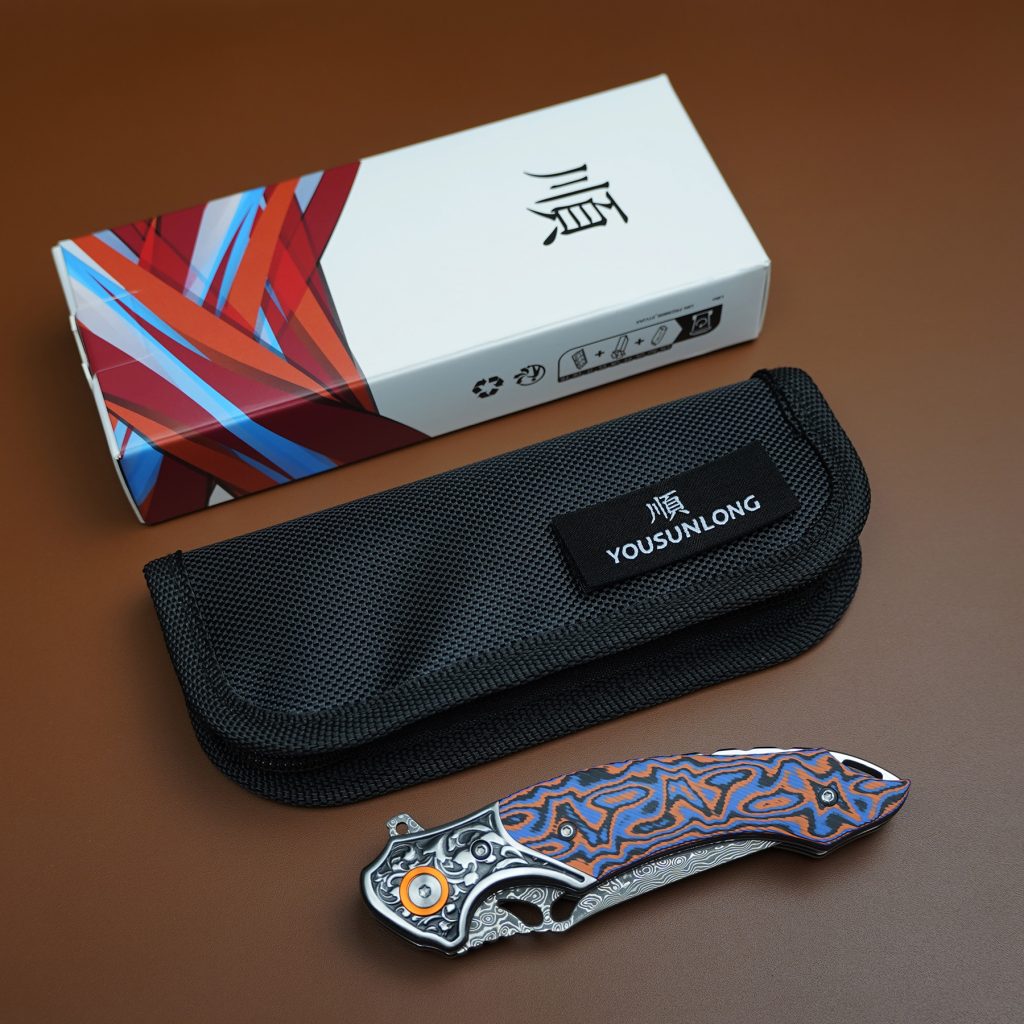
Deployment and Action: Consistency Over Flash
The knife uses a flipper tab to deploy the blade, paired with a liner lock. Instead of focusing on speed or “snap,” I paid attention to reliability.
The flipper action is smooth and predictable. With a standard finger motion, the blade deploys cleanly and locks with a clear, reassuring engagement. The detent is tuned well enough to prevent accidental opening in the pocket while still allowing comfortable one-handed operation.
In repeated use, the action remained consistent. There was no gritty feel, no hesitation, and no change in lockup. For an everyday carry Damascus knife, this kind of consistency matters more than dramatic opening speed.
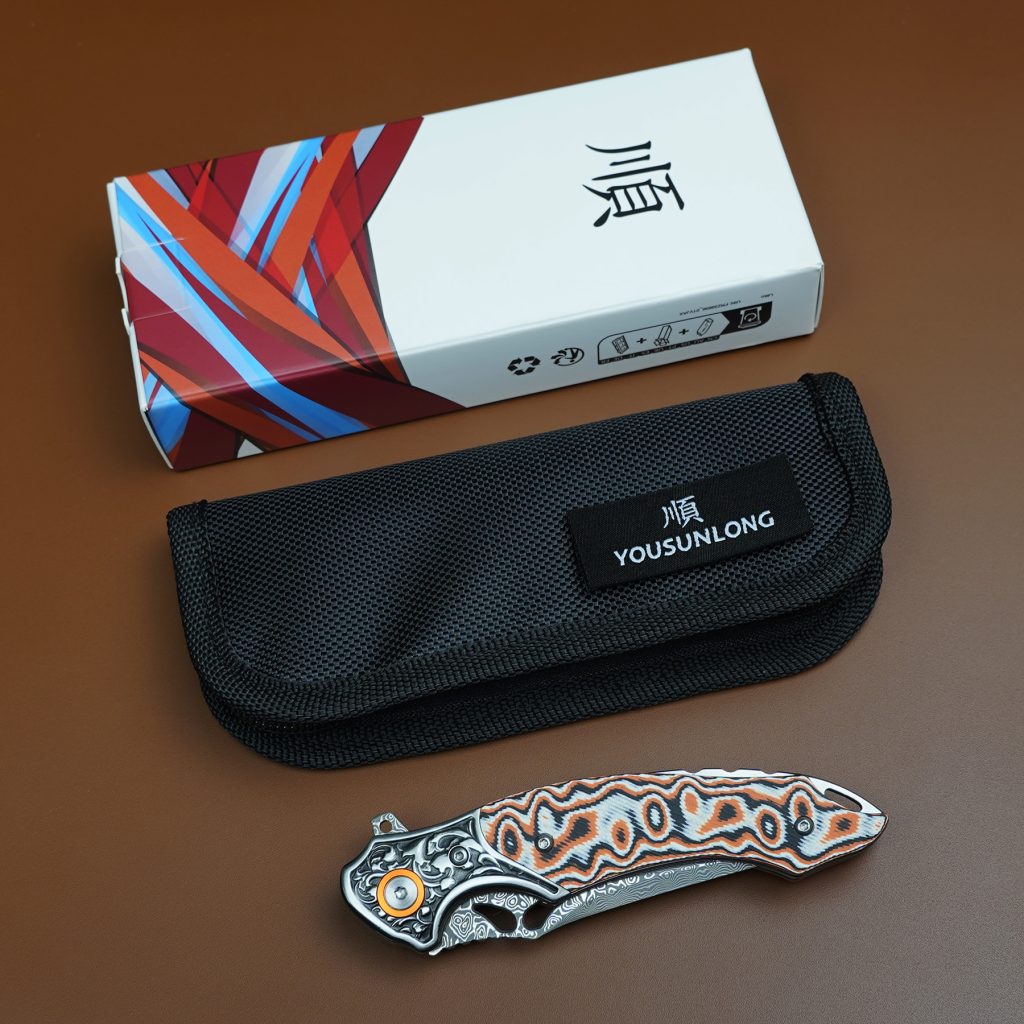
Liner Lock Performance: Simple and Reliable
The liner lock engages at a stable position on the tang. It doesn’t feel rushed or marginal. In use, the lock held firmly without flex or movement.
Unlocking the blade is straightforward and safe, requiring no awkward grip changes. This makes the knife approachable for users who prefer familiar, proven locking mechanisms over more complex systems.
In practical terms, the liner lock does exactly what it should: it stays out of the way and does its job.
Cutting Performance: Real Tasks, Real Results
Rather than pushing the blade into extreme scenarios, I focused on tasks that reflect how most people use a Damascus folding outdoor knife.
Food Preparation
I used the knife to slice apples, bread, and simple trail snacks. The 83 mm blade length is well-suited to these tasks, allowing smooth cuts without forcing awkward angles.
The edge geometry supports clean slicing, and the Drop Point profile gives good control when cutting on small surfaces. Food release was reasonable for a patterned blade, and cleanup was easy.
Utility Tasks
For opening packaging, cutting cord, and trimming materials, the knife felt precise. The blade tip provides enough control for detail work without feeling fragile.
The Damascus steel held its edge well throughout repeated cuts, showing no noticeable degradation during normal use.
Light Outdoor Use
While this is not a heavy-duty survival knife, it handled light outdoor tasks comfortably. Small wood shavings, basic campsite prep, and general trail use were all within its natural range.
The knife feels confident when used within its intended purpose, which is often more important than raw strength.
Handle Experience: Colorful G10 in Practice
The colorful G10 handle stands out visually, but its real value becomes clear during use. G10 is known for durability and grip stability, and this handle delivers on both.
In hand, the handle feels neutral and predictable. There are no aggressive finger grooves or exaggerated contours, which allows different grip styles depending on the task.
Even with slightly damp hands, grip remained secure. The surface texture offers enough friction without being abrasive, making it comfortable during extended use.
From a maintenance standpoint, G10 is forgiving. Dirt and food residue wipe off easily, making this knife suitable for outdoor environments.
Ergonomics and Balance in Extended Use
Extended cutting sessions revealed that the knife’s overall ergonomics are well thought out. The handle length allows a full grip, and the blade geometry supports controlled cutting without forcing wrist adjustments.
The balance near the pivot helps reduce fatigue, especially during repetitive slicing. This becomes noticeable during food prep or utility tasks where consistency matters.
For users looking for a balanced EDC knife with Damascus steel, this design avoids extremes and focuses on comfort.
Maintenance and Long-Term Ownership
Damascus steel requires basic care, but nothing complicated. After use, wiping the blade clean and applying a light coat of oil is sufficient.
Over time, maintenance will likely involve:
- Occasional pivot lubrication
- Edge maintenance with stones or strops
- Keeping the blade dry after food use
The G10 handle requires minimal attention, which simplifies long-term ownership.
Who This Knife Is Best Suited For
Based on real use, this knife is well-suited for:
- Everyday carry enthusiasts
- Outdoor hikers and campers
- Users who appreciate Damascus aesthetics without sacrificing function
- People looking for a reliable flipper knife with modern materials
- EDC users who value balance and predictability
It may not appeal to those seeking ultra-light minimalist knives or heavy-duty survival tools. Instead, it occupies a practical middle ground.