There’s a moment in every serious kitchen when the noise fades away.
The burners are hot.
The cutting board is covered with ingredients.
Steam rises slowly from a cast iron pan.
And somewhere between trimming beef short ribs and slicing herbs for finishing salt, the chef reaches for the one tool that matters more than any other.
The chef’s knife.
Not because it’s expensive.
Not because it looks beautiful on social media.
But because after thousands of cuts, hundreds of hours of prep, and years of muscle memory, chefs understand something most people eventually learn the hard way:
A great chef’s knife changes the entire experience of cooking.
In 2026, more professional chefs, luxury home cooks, culinary creators, and high-end kitchens are moving toward knives that combine high-end steel technology, refined balance, elegant materials, and real-world usability.
One knife that perfectly represents this movement is the new YOUSUNLONG 8-inch CuMai Copper Damascus Chef’s Knife with Burlwood Handle.
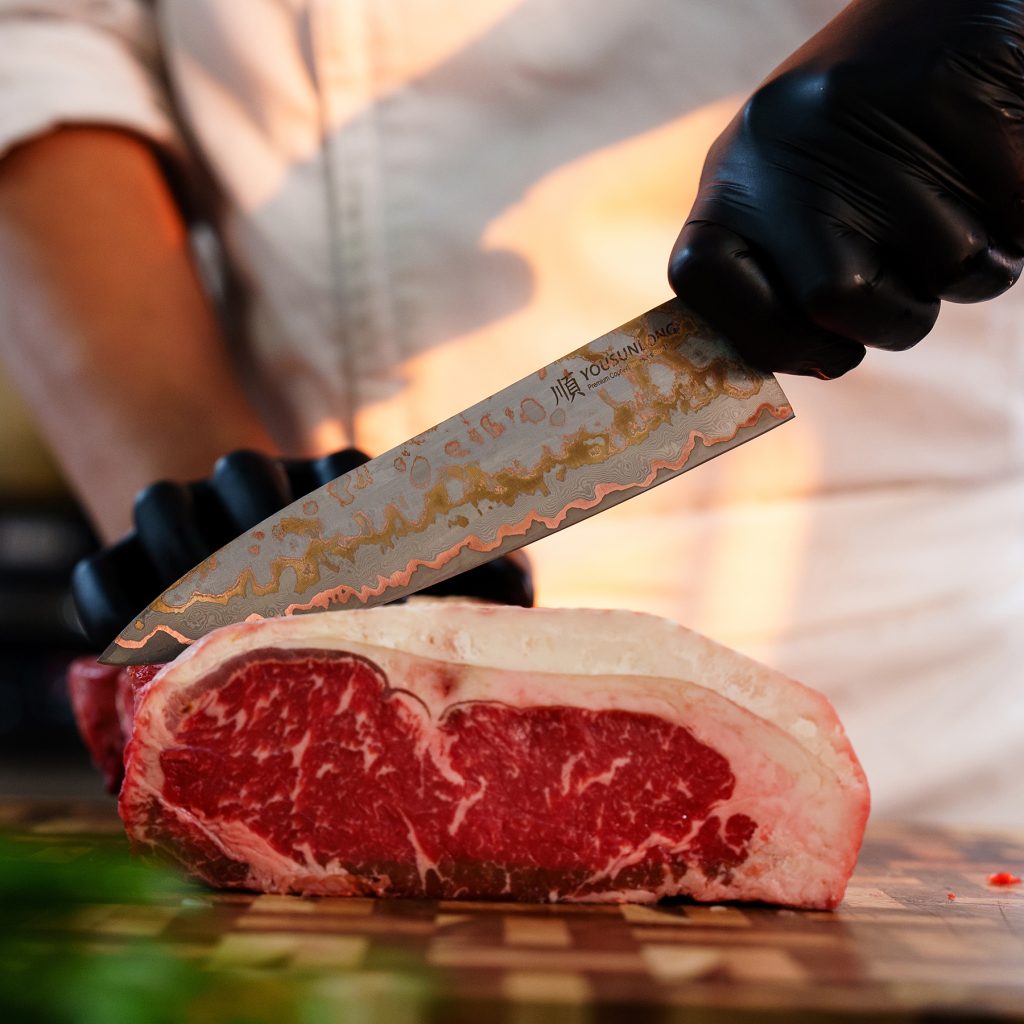
This is not a gimmick knife built only for display photos.
It’s a serious kitchen tool designed with the mindset of modern culinary professionals.
This week, I spent several days testing it in my own kitchen, preparing steak, trimming beef short ribs, slicing vegetables, chopping herbs, and handling real prep work under realistic conditions.
No staged studio setup.
No exaggerated “laser sharp” claims.
Just honest cooking.
And after extended use, I finally understood why knives like this are becoming increasingly popular among executive chefs and serious cooking enthusiasts who care about performance as much as presentation.
Specifications
Before talking about feel and performance, here are the core specifications:
- Overall Length: 345 mm
- Blade Length: 205 mm
- Handle Length: 140 mm
- Weight: 237 g
- Blade Style: 8” Chef’s Knife
- Blade Material: Premium CuMai Copper Damascus Steel
- Handle Material: Natural Burlwood
- Hardness: HRC 60
- Heat Treatment: Deep Cryogenic Treatment + Precision Quenching
- Construction: Folded & Forged Damascus Steel
On paper, these specifications place the knife directly into the category of premium professional chef knives.
But numbers alone never explain why a knife feels special.
That only becomes obvious once the knife touches the cutting board.
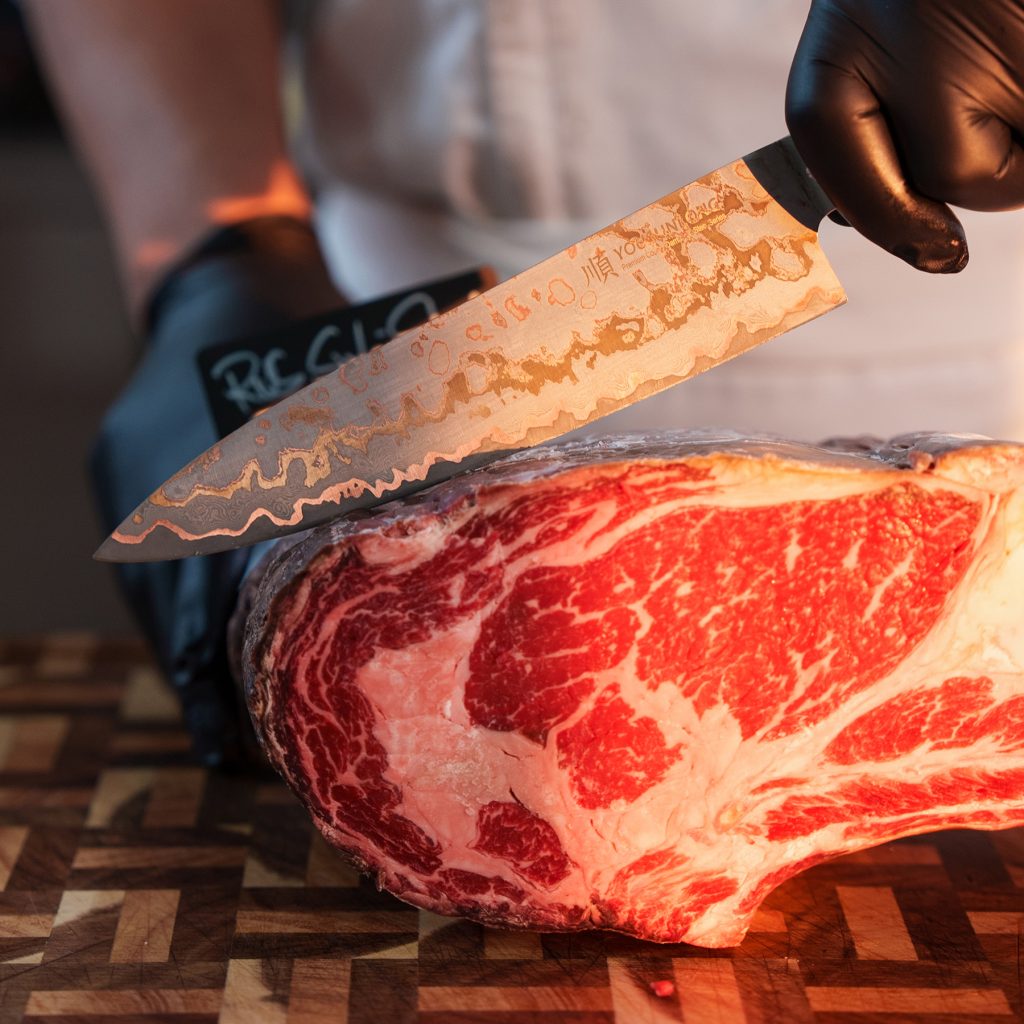
Why Executive Chefs Care So Much About Knives
People outside professional kitchens often misunderstand the relationship chefs have with knives.
The knife is not an accessory.
It’s not a fashion item.
And despite what social media sometimes suggests, executive chefs do not choose expensive knives simply to show status.
In reality, professional kitchens are physically demanding environments where tiny inefficiencies become exhausting over time.
A chef may perform:
- Thousands of slicing motions per shift
- Hours of repetitive prep work
- Continuous protein trimming
- Precision vegetable cuts
- Delicate plating tasks
In this environment, the wrong knife creates fatigue very quickly.
A well-designed chef’s knife reduces:
- Wrist strain
- Hand fatigue
- Cutting resistance
- Ingredient tearing
- Workflow interruption
That’s why professional chefs obsess over details most casual users overlook:
- Balance point
- Spine finishing
- Edge geometry
- Steel hardness
- Handle comfort
- Blade stability
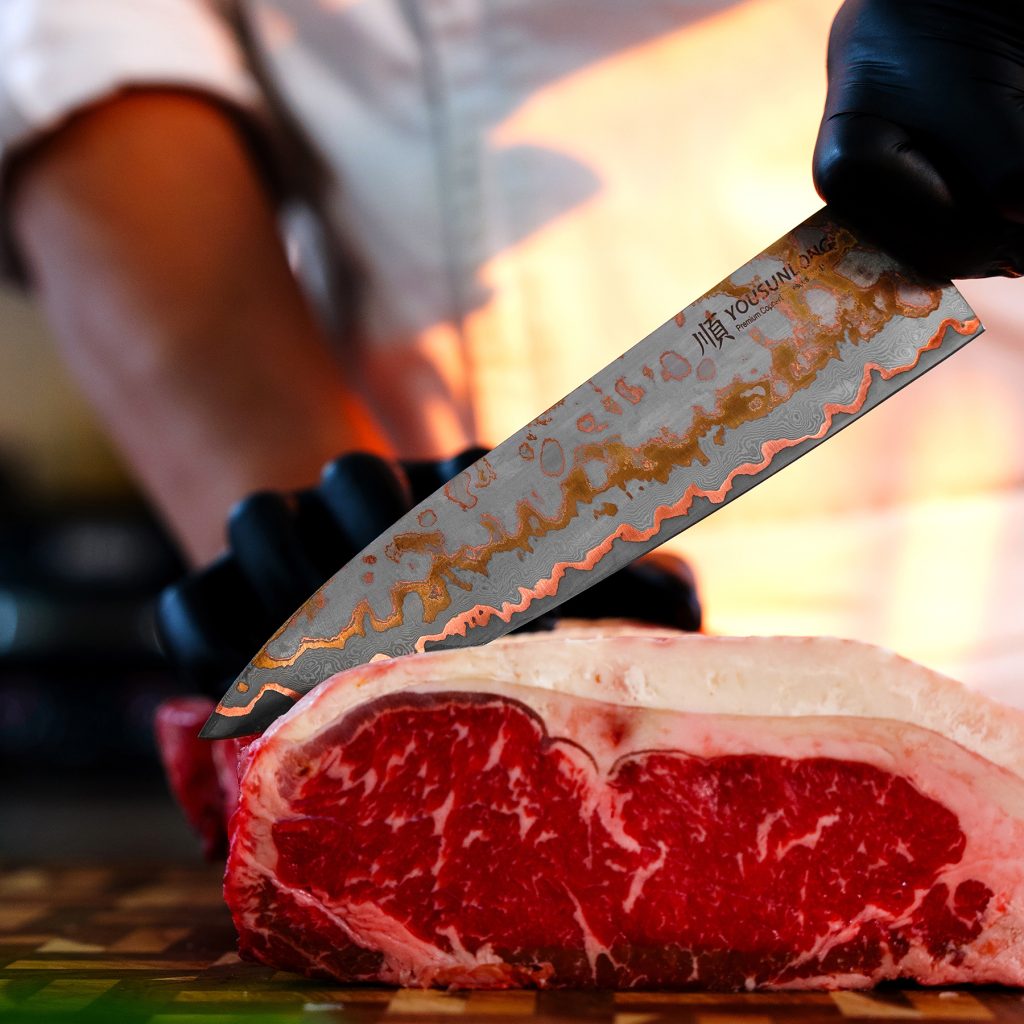
After using this YOUSUNLONG CuMai Copper Damascus Chef’s Knife extensively, it’s clear the design team understood these priorities.
First Impressions: Packaging That Feels Premium Without Being Excessive
One thing luxury kitchen brands have learned from both Japanese knife culture and modern industrial design is that presentation matters.
Not because chefs need fancy boxes.
But because thoughtful packaging usually reflects thoughtful product development.
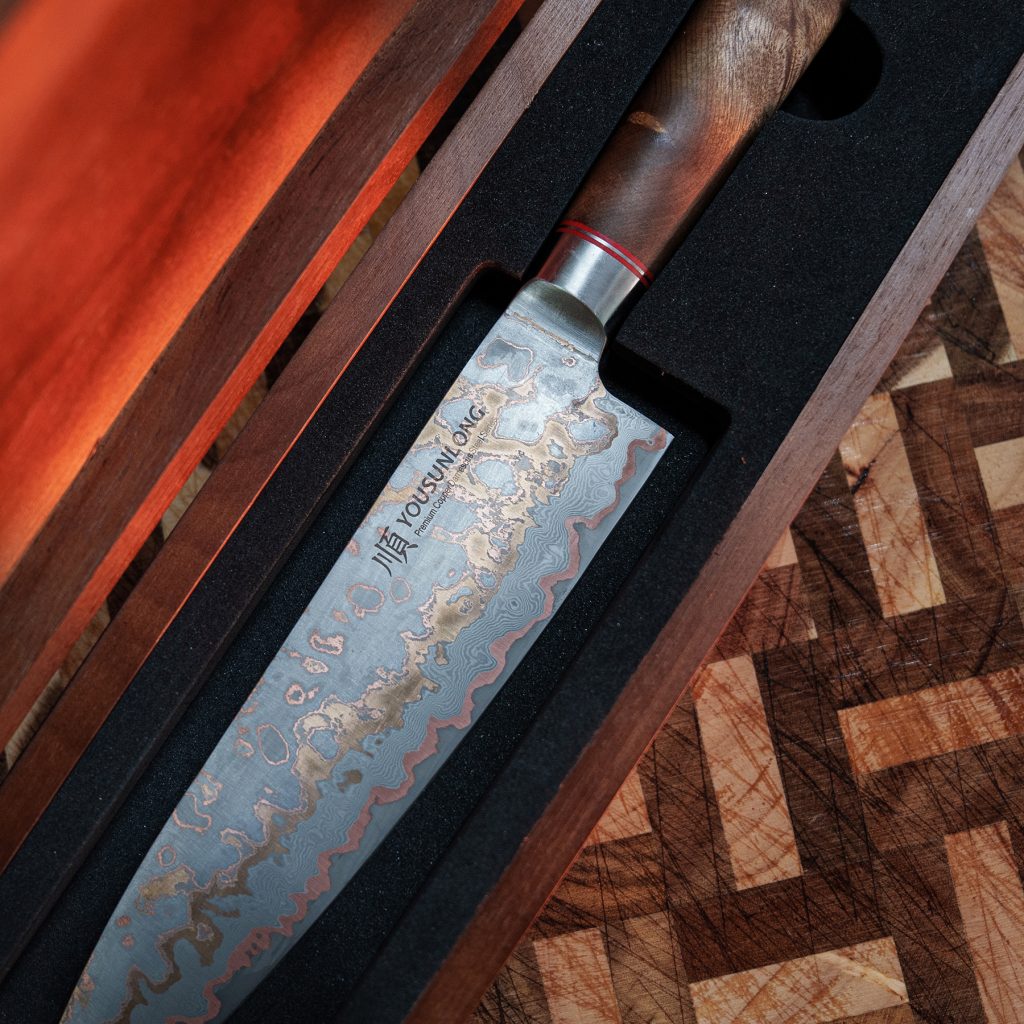
The knife arrives in a beautifully designed color retail package.
Inside that outer layer sits a rigid black presentation box with an elegant Asian-inspired logo printed across the surface.
The opening experience immediately feels intentional.
Lifting the lid slowly reveals:
- A velvet-lined interior
- Thick eco-friendly PE blade protection
- A multilingual instruction manual
- Carefully organized presentation layers
The structure actually reminds me of premium Apple packaging.
Clean. Minimal. Controlled.
Nothing feels cheap or rushed.
This matters because many knife brands focus entirely on the blade while ignoring the ownership experience surrounding it.
Here, the presentation already communicates professionalism before the knife is even touched.
Picking Up the Knife for the First Time
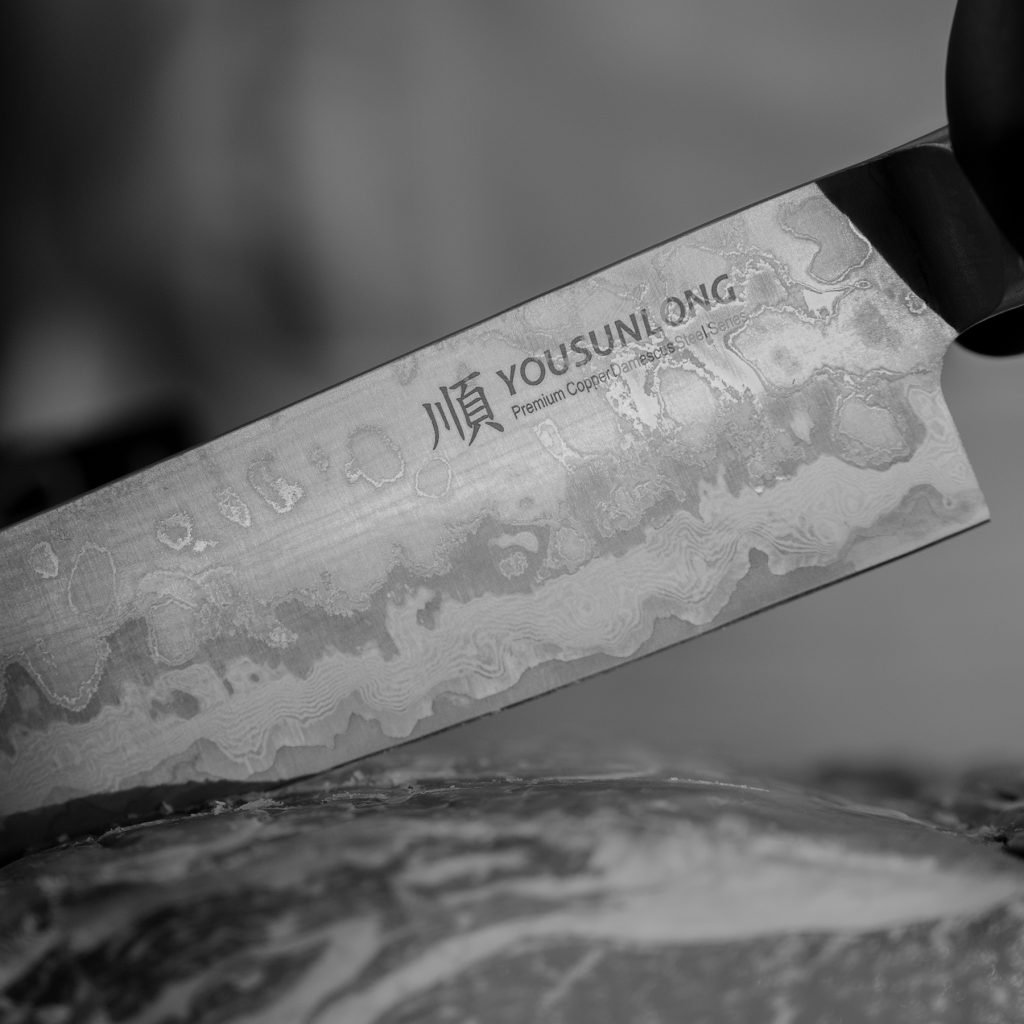
The first thing I noticed after lifting the knife from the velvet-lined box was balance.
At 237 grams, the knife has enough mass to feel substantial, but it avoids the overly heavy sensation common in many decorative Damascus knives.
That distinction is important.
A chef’s knife should never feel like a crowbar.
Instead, it should create natural forward momentum during slicing while remaining agile enough for precision work.
This knife achieves that balance surprisingly well.
The pinch grip position feels especially refined.
The balance point sits naturally near the blade transition, which immediately creates a more controlled and professional cutting experience.
After years of testing kitchen knives, this is usually one of the clearest signs that real users were involved during development.
The Burlwood Handle: Natural Warmth in a Modern Kitchen
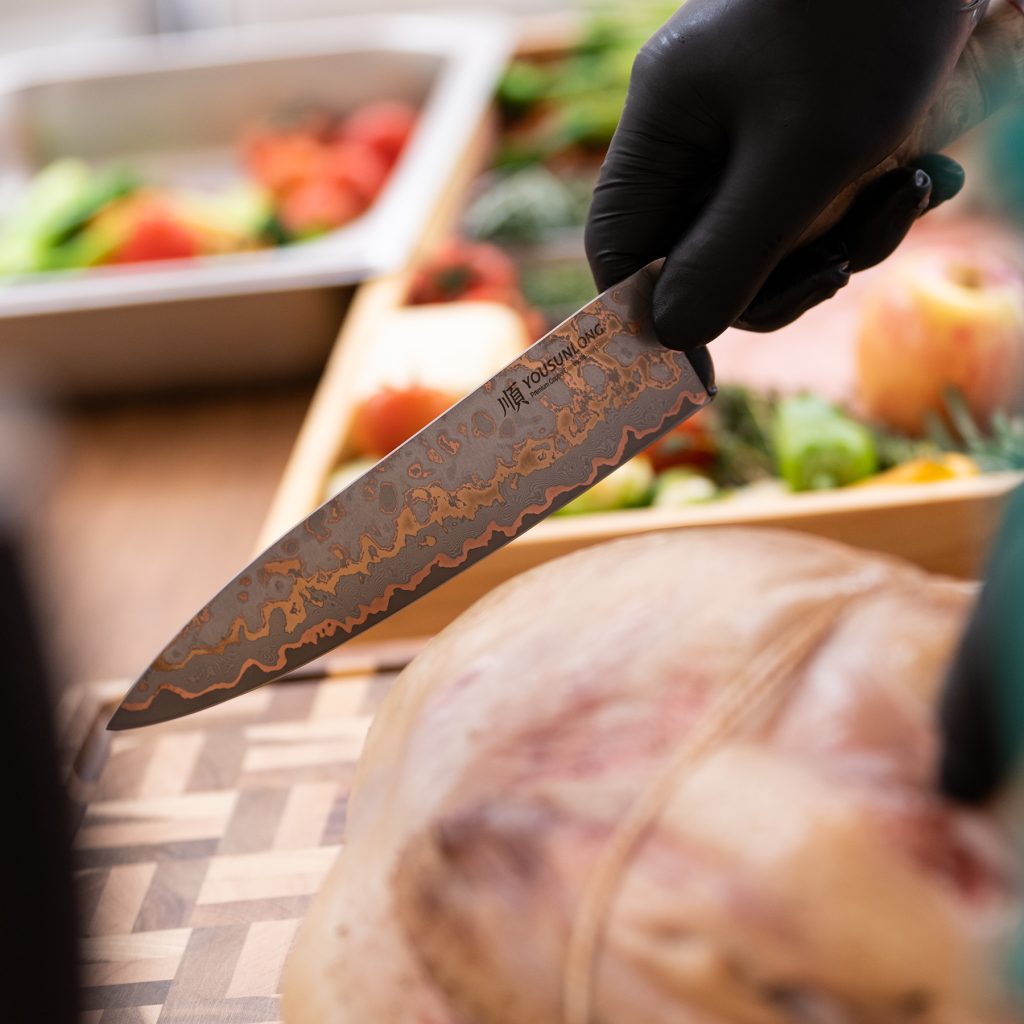
The Burlwood handle is easily one of the most visually striking parts of the knife.
But unlike many decorative handles, this one remains highly functional during actual use.
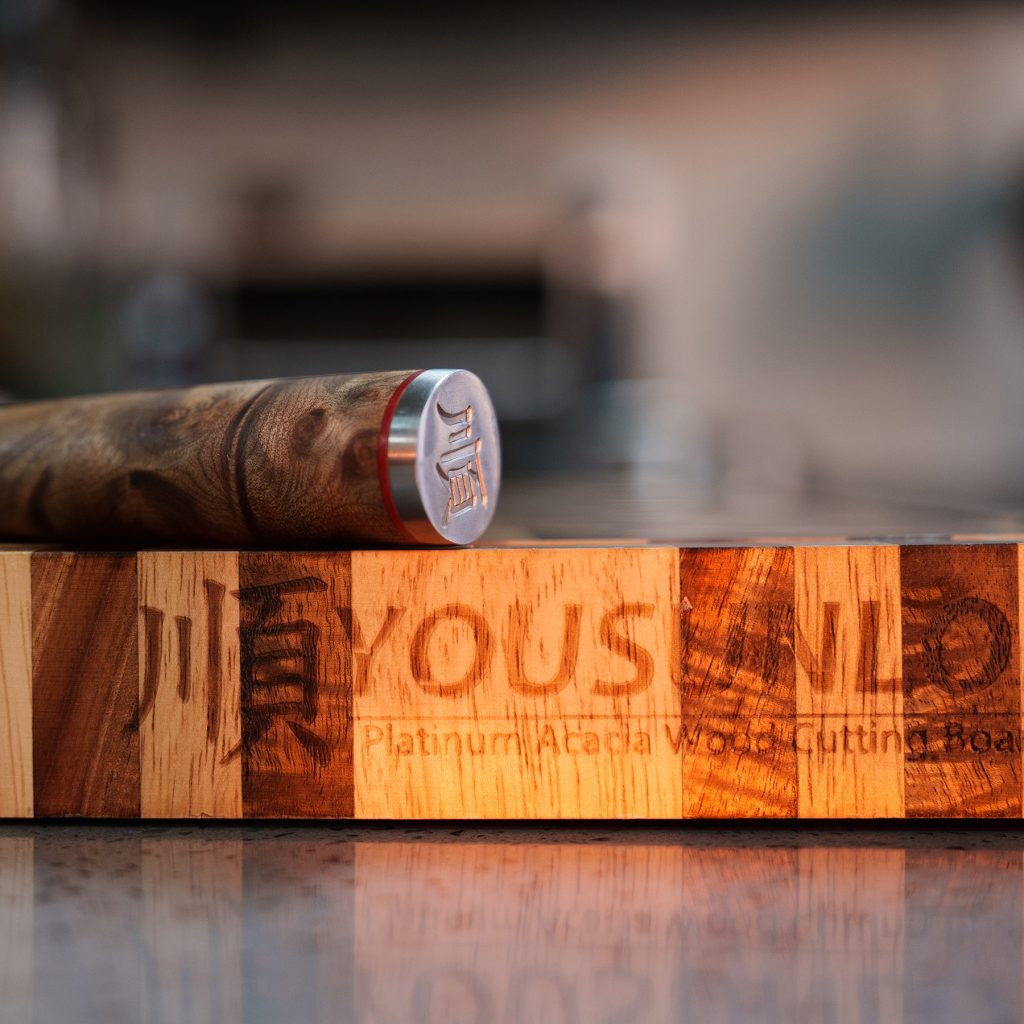
Under natural kitchen lighting, the burlwood grain develops layered depth and texture that changes depending on angle and light temperature.
It feels organic.
Warm.
Almost alive.
Compared to synthetic handles, natural wood creates a completely different emotional experience during cooking.
That might sound strange to non-cooks, but experienced chefs understand immediately.
Cooking is sensory.
The feel of the handle matters.
The warmth matters.
The tactile response matters.
This handle avoids excessive contouring and instead focuses on ergonomic neutrality.
That makes it comfortable across multiple grip styles.
During longer prep sessions involving:
- Beef trimming
- Onion slicing
- Herb chopping
- Garlic mincing
…the handle remained consistently comfortable.
No pressure hotspots developed.
No sharp transitions irritated the hand.
And despite slight moisture during prep work, grip stability remained excellent.
There’s a reason many executive chefs still prefer wood-handled knives despite modern synthetic alternatives.
Natural materials create a calmer and more connected cooking experience.
CuMai Copper Damascus Steel: Beauty Backed by Engineering
Now we arrive at the real centerpiece of the knife:
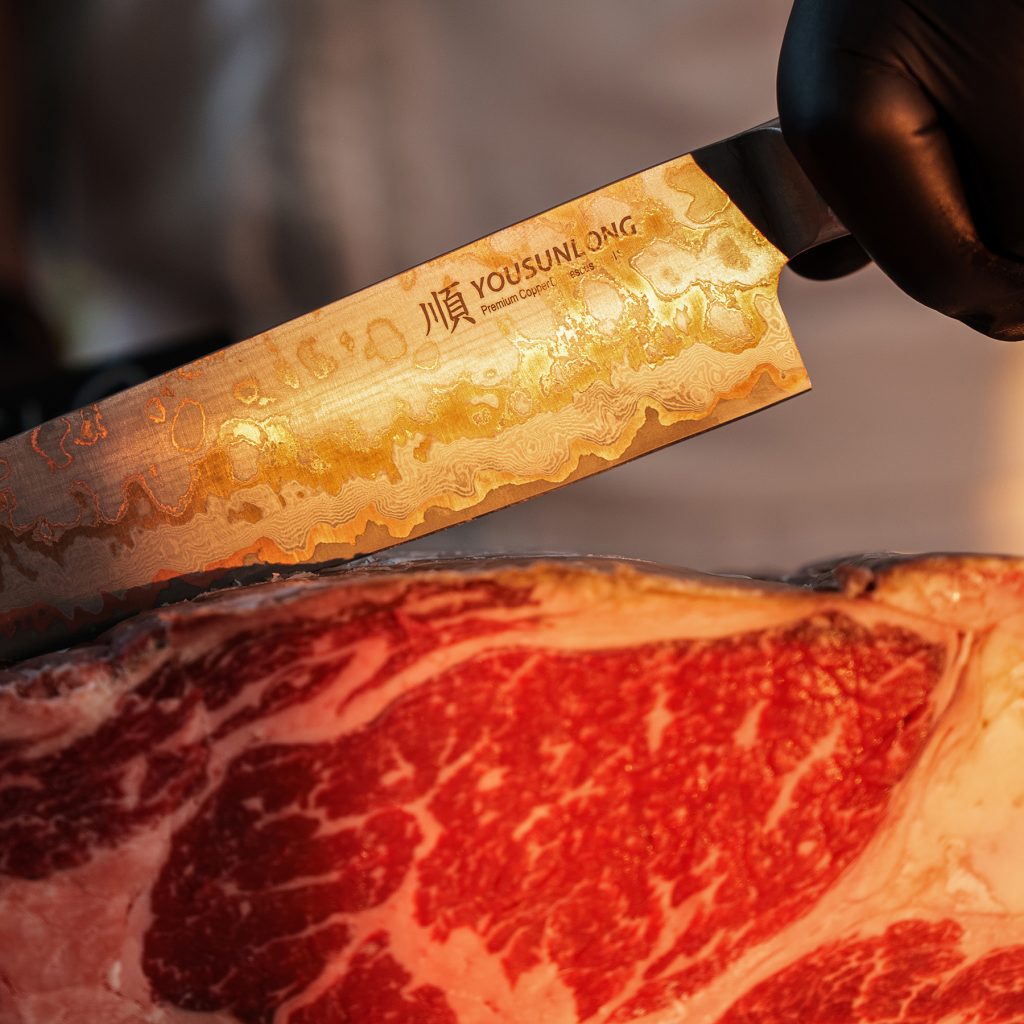
The Premium CuMai Copper Damascus Steel blade.
This blade immediately separates itself from ordinary Damascus steel.
Traditional Damascus usually relies on monochrome pattern contrast.
CuMai Copper Damascus introduces an entirely different visual language.
The blade combines:
- High-performance steel layers
- Copper tones
- Brass-like transitions
- Folded Damascus patterning
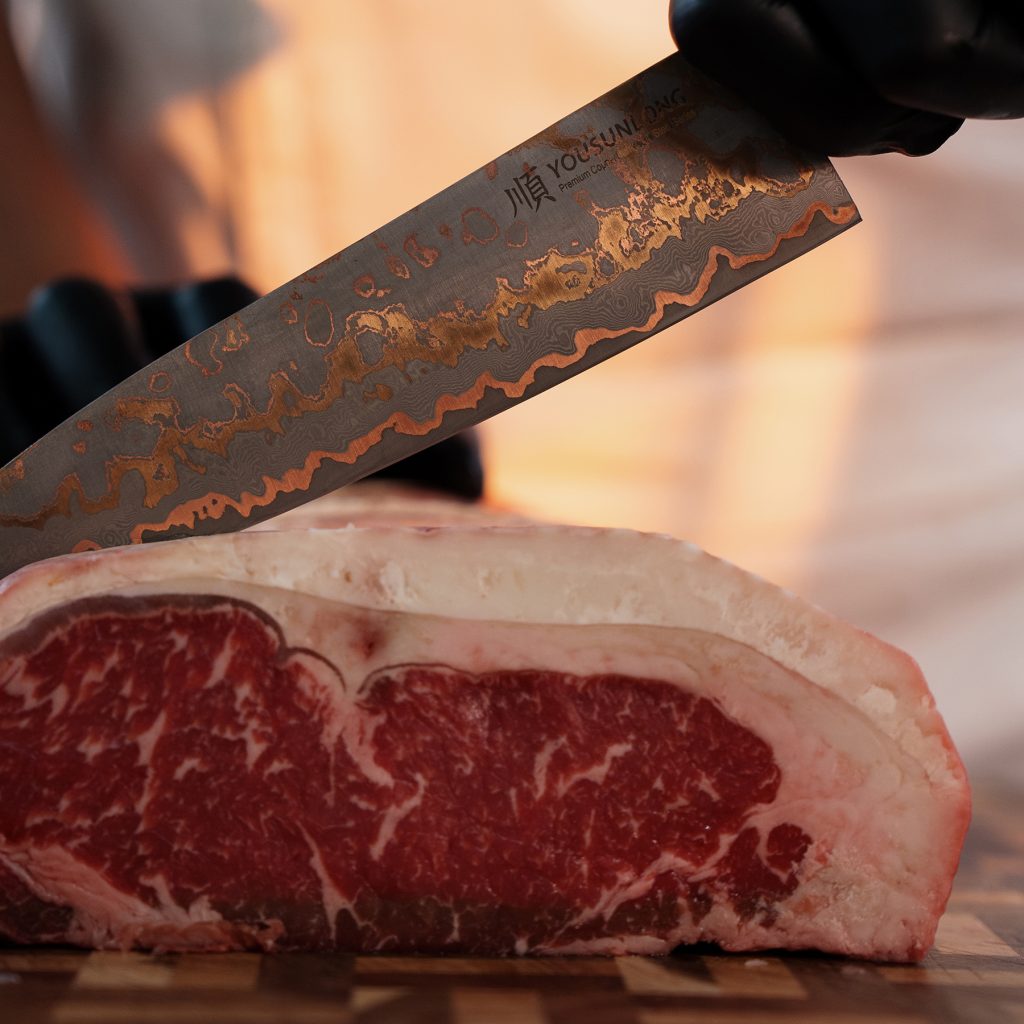
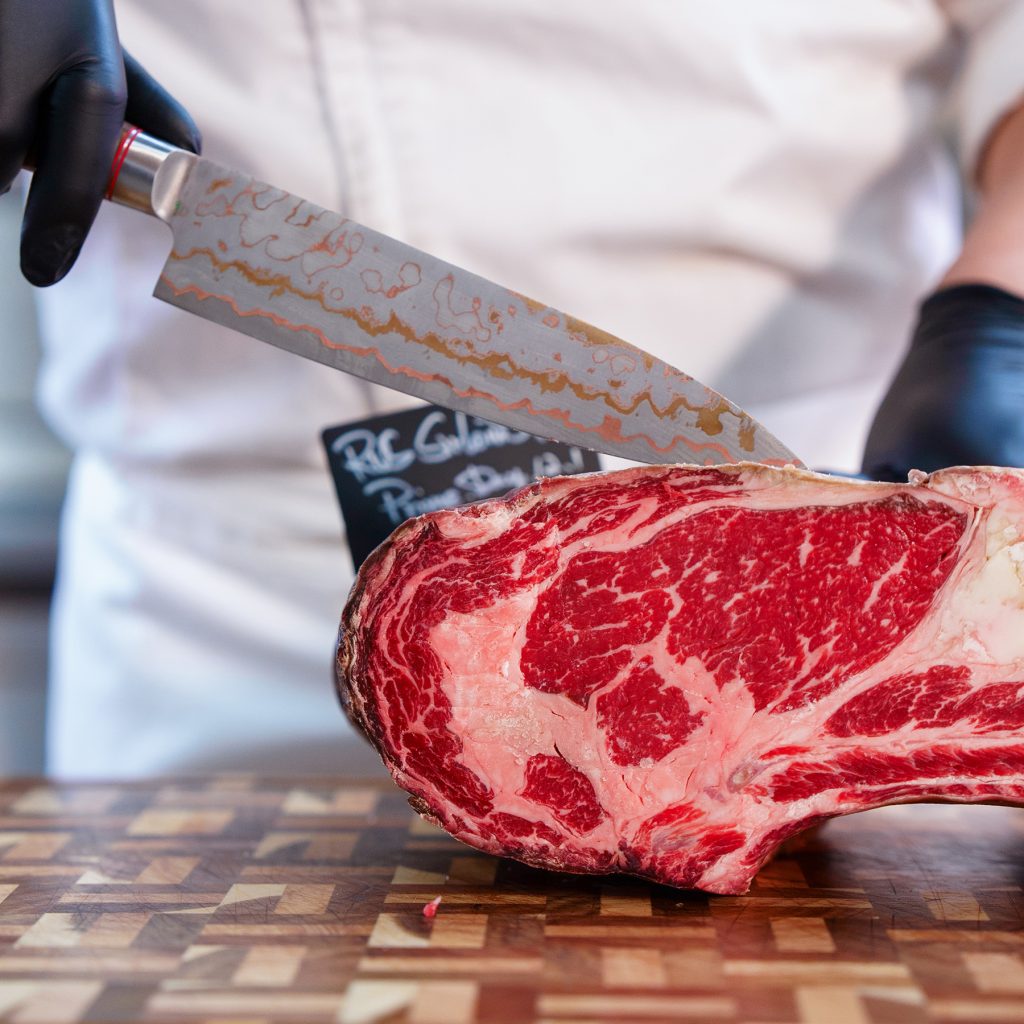
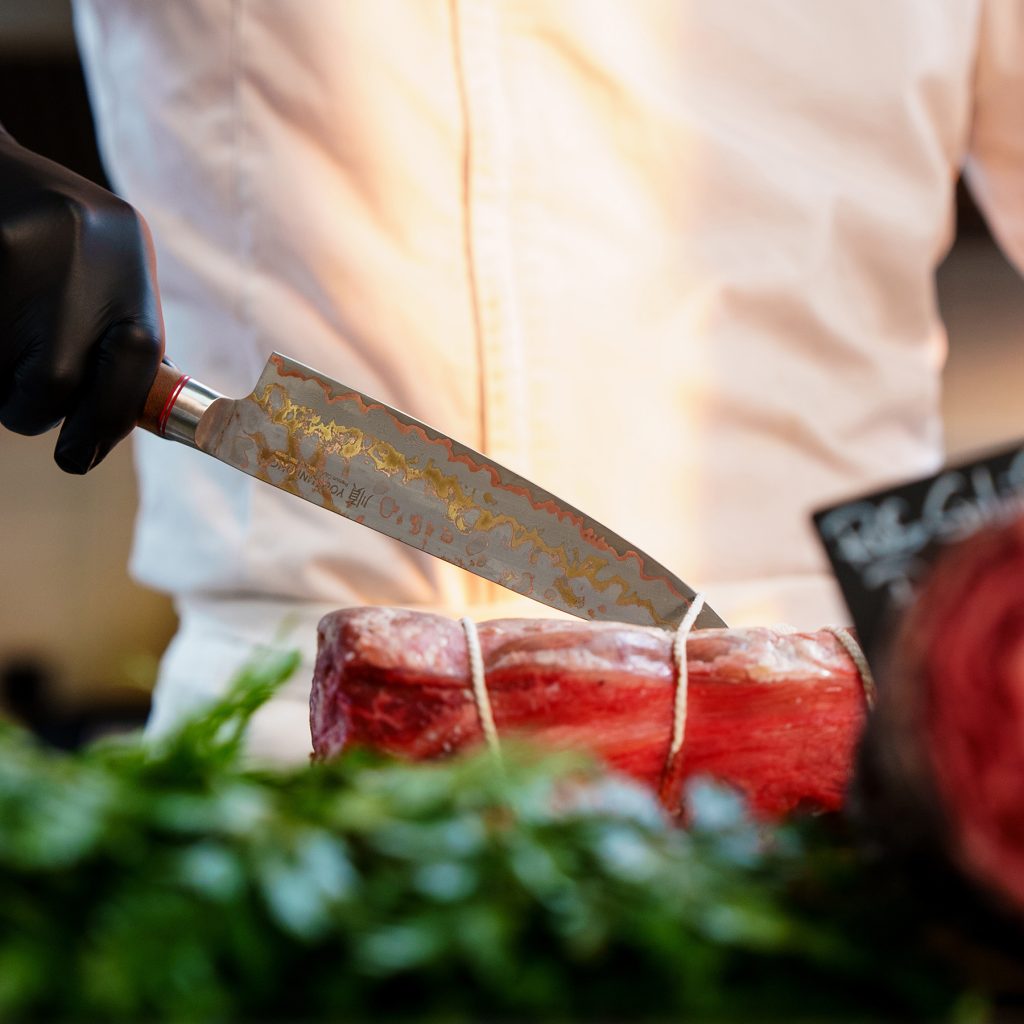
Under warm kitchen lighting, the blade develops depth that almost resembles flowing topographic lines.
But what makes this interesting is that the visual beauty is supported by real metallurgical engineering.
Creating CuMai Copper Damascus is significantly more complex than producing standard layered steel.
The process requires:
- Controlled forging temperatures
- Precise bonding techniques
- Deep heat treatment understanding
- Careful grinding symmetry
- Advanced finishing control
This isn’t easy material to manufacture consistently.
And after close inspection, several details stood out:
- Extremely even grind lines
- Clean layer transitions
- Refined spine polishing
- Consistent edge geometry
- Smooth choil finishing
These are details serious chefs notice immediately.
Poor finishing becomes obvious during extended kitchen use.
Good finishing disappears into the experience.
That’s exactly what happens here.
The Science Behind HRC 60 Hardness
One of the most important specifications on this knife is its HRC 60 hardness rating.
Most casual buyers see hardness numbers without understanding what they actually influence.
In professional culinary use, hardness directly affects:
- Edge retention
- Cutting stability
- Sharpening frequency
- Blade responsiveness
Lower hardness blades dull faster.
Extremely high hardness blades can become brittle.
HRC 60 exists in an ideal performance range for premium chef knives because it balances:
- Sharpness longevity
- Structural durability
- Controlled flexibility
This knife also benefits from:
- Deep cryogenic treatment
- Precision quenching
- Folded forging construction
These processes improve grain structure and long-term edge stability.
And during testing, the performance difference became very obvious.
Real Kitchen Test: Breaking Down Beef Short Ribs
For the primary cutting test, I used thick beef short ribs.
This is one of the best ways to evaluate a chef’s knife because beef exposes weaknesses quickly.
You encounter:
- Dense muscle fibers
- Fat transitions
- Connective tissue
- Surface resistance
A mediocre knife tears.
A great knife glides.
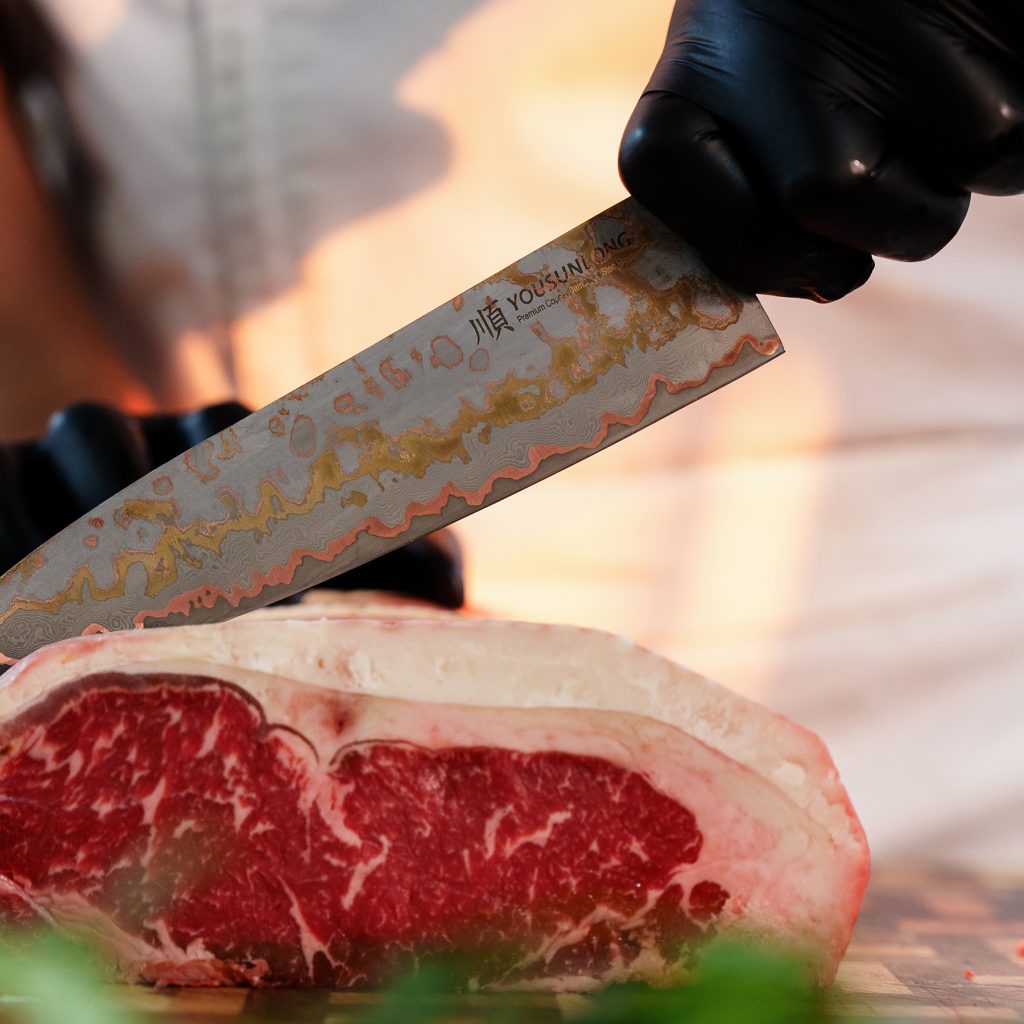
The first slice immediately revealed the blade’s refinement.
Instead of forcing the cut, the knife moved naturally through the meat with minimal resistance.
The edge entered cleanly.
Fat separated smoothly.
Fibers remained intact rather than crushed.
That controlled cutting feel is exactly why professional chefs invest in premium steel.
Cutting Performance: Smoothness Over Aggression
One thing I appreciated immediately was the personality of the edge.
This knife does not feel “dangerously sharp” in the exaggerated internet sense.
Instead, it feels controlled.
Stable.
Predictable.
That’s what experienced chefs actually prefer.
An overly aggressive edge often feels unstable during delicate work.
This knife instead delivers:
- Low drag slicing
- Excellent edge tracking
- Controlled tip precision
- Stable push cutting
The blade naturally follows intended movement without wandering.
Especially during thin protein slicing, the knife maintains directional stability exceptionally well.
Why Professional Chefs Prefer Elegant Chef’s Knives
There’s a misconception online that premium kitchen knives are mostly about aesthetics.
That’s not true.
Elegance in professional tools usually comes from refinement.
When chefs spend thousands of hours cooking, they begin prioritizing:
- Smooth movement
- Reduced resistance
- Better balance
- Visual calmness
- Long-term comfort
An elegant chef’s knife reduces friction both physically and mentally.
That’s why so many professional executive chefs continue using beautifully finished knives.
The beauty is not decoration.
It’s the visible result of refinement.
Food Release and Blade Geometry
Another impressive aspect of this knife is food release.
Blade geometry matters enormously during prep work.
Poor geometry creates excessive sticking.
Good geometry improves workflow efficiency.
While slicing beef, onions, and potatoes, the knife demonstrated very reasonable food separation.
Ingredients released cleanly without constantly clinging to the blade face.
Again, this is something serious cooks notice immediately.
Small efficiencies become huge over time.
Long-Term Comfort During Prep Sessions
I spent several continuous hours using the knife across different prep tasks.
This is usually where flaws begin appearing.
However, the knife remained consistently comfortable because of several design decisions:
- Balanced overall weight
- Comfortable pinch grip position
- Rounded handle transitions
- Controlled blade thickness
- Stable edge tracking
Fatigue remained surprisingly low.
And importantly, the knife never felt oversized despite its substantial presence.
Why Expensive Steaks Deserve High-End Knives
A premium steak deserves a premium blade.
Not because of status.
Because high-quality meat responds differently to clean cutting.
A properly sharpened high-hardness chef’s knife preserves:
- Texture
- Juices
- Fiber structure
- Presentation quality
Dull knives compress meat.
Sharp knives separate cleanly.
That difference becomes extremely noticeable with premium cuts like:
- Wagyu
- Ribeye
- Dry-aged beef
- Beef short ribs
This is one reason professional executive chefs invest heavily in knife quality.
The knife directly influences the final dining experience.
The Emotional Side of Cooking
One thing most reviews ignore is emotional experience.
Cooking is not only technical.
The environment matters.
The lighting matters.
The sound of the knife on the board matters.
Using a well-balanced CuMai Copper Damascus chef’s knife with a natural Burlwood handle creates a slower, calmer cooking atmosphere.
The blade catches warm kitchen light beautifully.
The wood feels organic in the hand.
The cutting motion becomes rhythmic.
This is difficult to quantify, but chefs understand it immediately.
Good tools improve not only performance, but also mood.
Why This Knife Fits Modern 2026 Culinary Trends
In 2026, the culinary world is shifting toward tools that combine:
- Professional performance
- Artisan aesthetics
- Sustainable materials
- Long-term durability
- Functional elegance
This knife fits directly into that movement.
It combines:
- Traditional forging inspiration
- Modern metallurgy
- Contemporary industrial design
- Professional kitchen usability
Without becoming flashy or impractical.
Who This Knife Is Really For
This knife is best suited for:
- Serious home cooks
- Steak enthusiasts
- Culinary creators
- High-end kitchens
- Professional chefs
- Damascus knife collectors who actually cook
It especially appeals to people searching for:
- Best chef knife 2026
- Premium Damascus chef knife
- CuMai Copper kitchen knife
- Professional chef knife review
- Luxury Burlwood chef knife
- High-end kitchen knives for steak preparation
Final Thoughts
After extended testing, this YOUSUNLONG CuMai Copper Damascus Chef’s Knife feels thoughtfully refined.
Not just beautiful.
Useful.
That distinction matters.
The combination of:
- HRC 60 steel hardness
- Deep cryogenic treatment
- Folded CuMai Copper Damascus construction
- Natural Burlwood handle
- Balanced geometry
- Professional finishing quality
…creates a chef’s knife that performs confidently in real kitchens.
This is not simply a collector’s display piece.
It is a serious culinary tool designed for people who genuinely enjoy cooking.
And honestly, after several days of prep work, slicing, trimming, and testing, I completely understand why more professional executive chefs in 2026 are moving toward knives like this.
Because the best chef’s knife is not the loudest one.
It’s the knife that quietly earns trust every single time it touches the cutting board.